
Electronics Retailer Is Zooming After Earnings

We’re almost done with earnings season.
It’s a busy time in the stock market with so many companies giving updates on their latest quarterly performance.
One retailer just reported earnings and blew everyone away.
Best Buy (ticker: BBY) is the largest electronics specialty retailer in the United States.
On Thursday, Best Buy reported earnings for its 1st quarter, and its results were amazing.
It reported an EPS of $1.28 vs. an expected $1.22.
Best Buy’s EPS also grew about 11% compared to the 1st quarter last year.
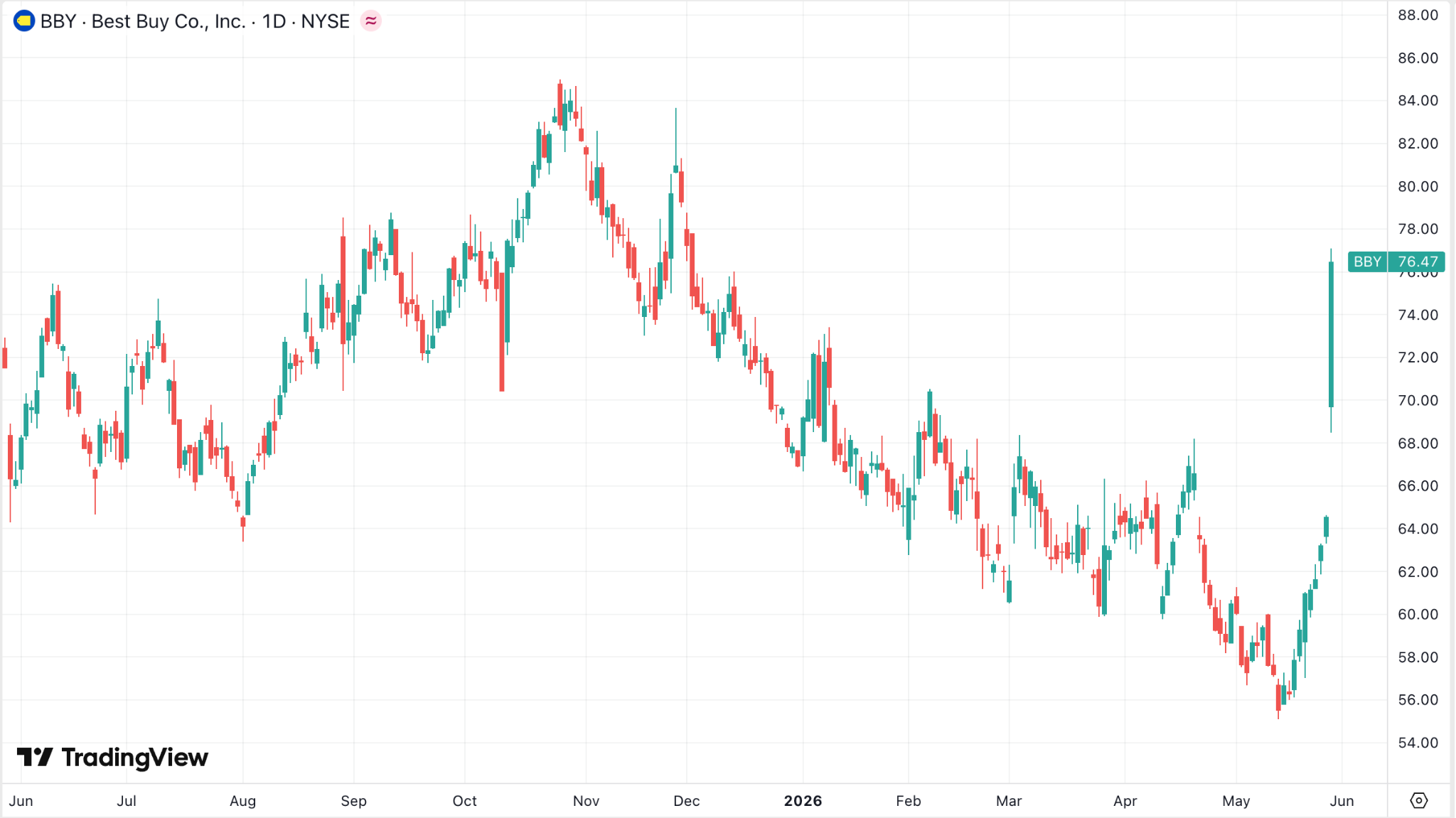
Its stock price soared almost 20% following the release and is approaching its 52-week high, which was reached last October.
I know what you’re thinking.
Beating earnings expectations by 5% with 11% earnings growth shouldn’t cause the stock price to jump almost 20%, right?
So why did Best Buy’s stock price jump so much?
Investors care a lot about comparable-store sales growth (also called same-store sales growth).
Comparable-store sales growth measures revenue growth in stores operating longer than a year.
It’s important for retailers because comparable-store sales growth shows whether retailers can grow organically or not.
Last quarter, Best Buy’s comparable-store sales grew 2%, reversing a recent trend of negative growth.
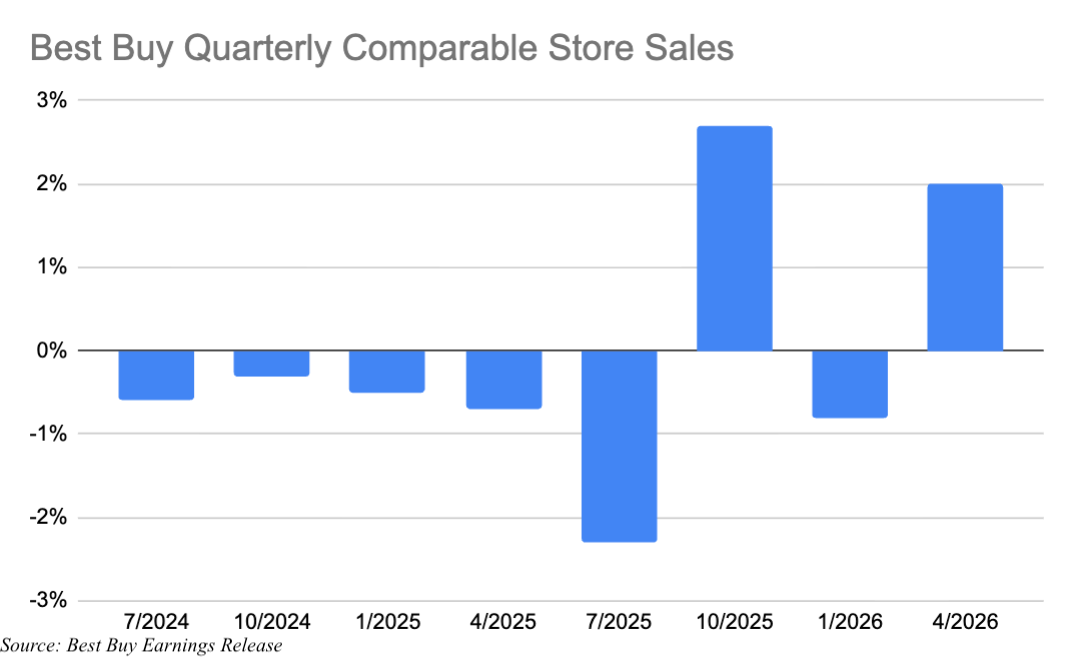
Analysts were only forecasting growth of 1%.
A 1% difference doesn’t seem like a lot, but it’s huge.
Best Buy grew during COVID as people needed new laptops, TVs, phones, and gaming devices to keep them busy during the pandemic.
But once the pandemic ended, Best Buy took a hit.
Customers stopped shopping at Best Buy because they already had the electronic devices they needed.
It was a worrying trend for the electronics retailer, but the comparable-store sales growth numbers show the trend is reversing.
Many of those devices bought during COVID are now obsolete and need to be replaced.
And people are returning to Best Buy stores to replace their devices.
Is Best Buy a good stock?
Despite the recent run-up in price, the stock is still cheap.
Best Buy’s price-to-earnings ratio is around 14x, which is below the average of other retailers.
And its price-to-sales ratio of 0.38x is right around Best Buy’s historical average.
Plus, Best Buy’s return on equity (ROE) of 39% is among the highest in the entire retail sector.
Phew… earnings season is almost over, and it’s been a busy one.
Did you make any trades based on earnings releases?
Send me a note if you made any big moves.
Coach Parker
Category: Stocks